Response time
The alert arrives with the identity, the zone and the position. The tag of the person dispatched then guides them by direction and distance. The time spent working out who is free and where shrinks accordingly.
Positioning tag · Festivals
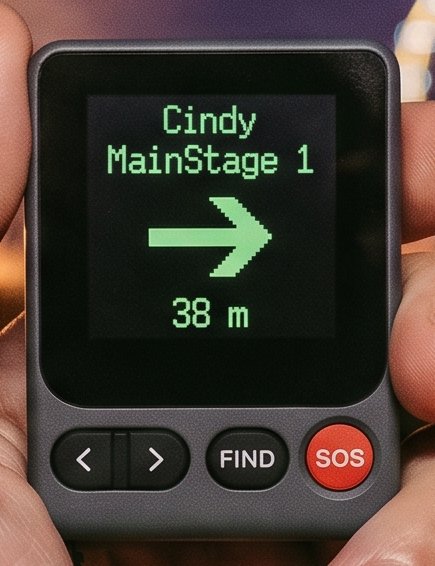
It is worn with the festival wristband. You pick who you want to reach, and the screen gives you a direction and a distance. If something goes wrong, pressing the SOS button sends your position to the medical post, accurate to roughly two metres.
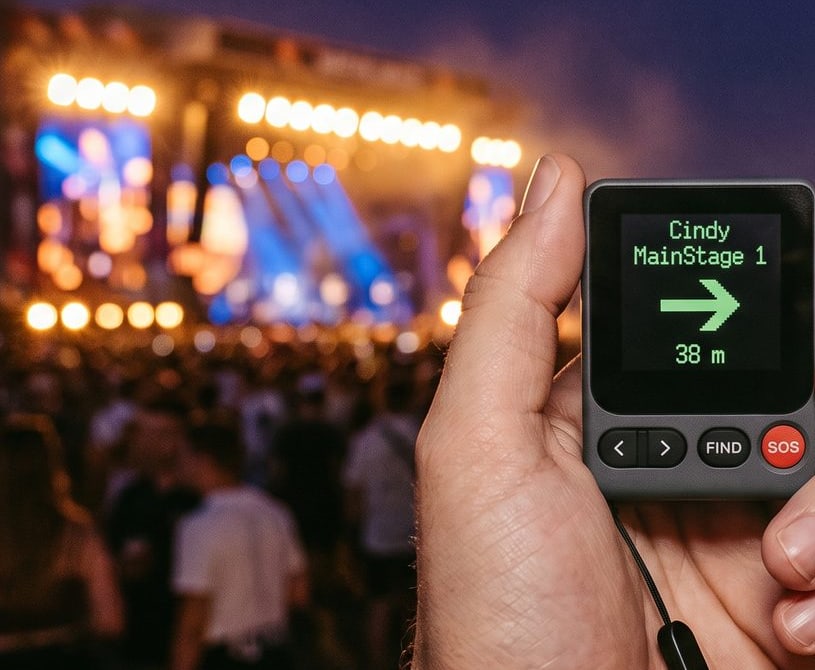
On a site holding tens of thousands of people, the mobile network usually saturates on the first evening. The tag relies on neither the mobile network, nor GPS, nor your phone. It talks directly to the anchors installed across the site.
Someone collapses in the pit, someone falls at the campsite, a situation turns bad. A long press on the SOS button sends out an alert transmission. The site anchors receive it, compute the tag position, and pass the alert to the control room with the wearer’s identity and zone.
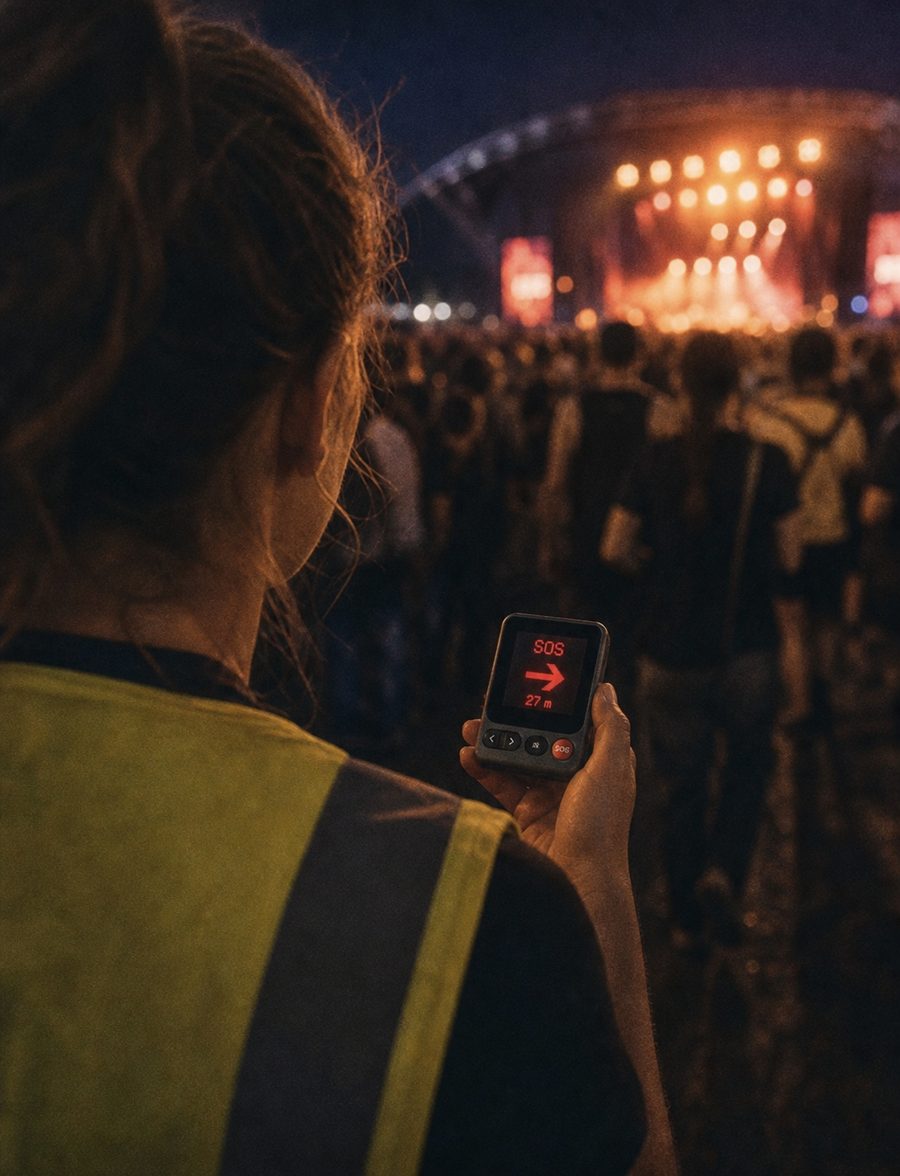
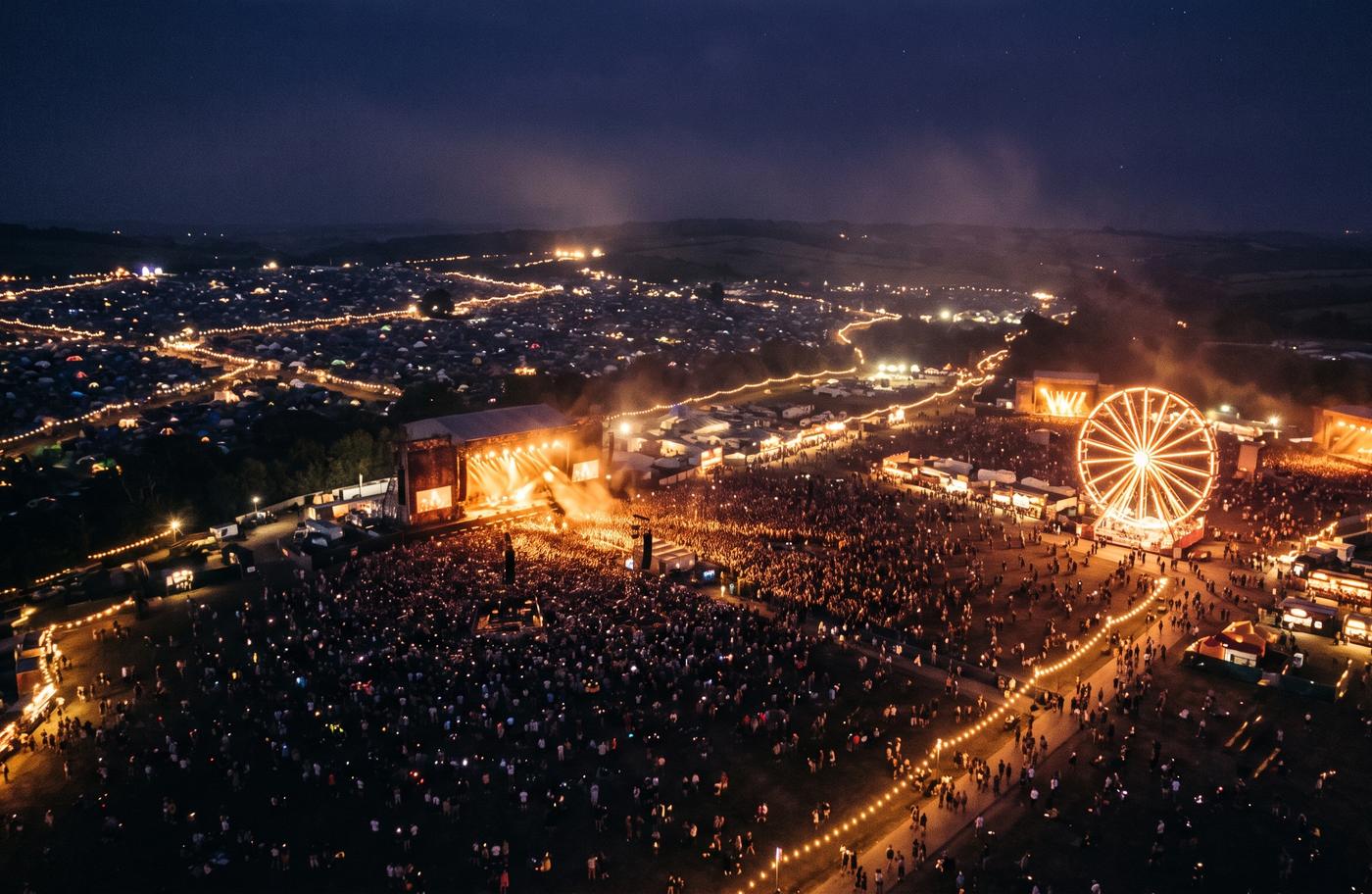
The same anchor network that serves festival-goers gives the safety team the position of its staff and of every alert. On an incident, the control room sends the closest person and guides them to the exact spot.
The alert arrives with the identity, the zone and the position. The tag of the person dispatched then guides them by direction and distance. The time spent working out who is free and where shrinks accordingly.
A discreet press on the SOS button is enough: nothing to say, nothing to describe, no phone to take out. The alert carries the position, and a trained member of the team is guided to the person. It comes on top of the dedicated staff and safe spaces already in place.
Response times, staffing by zone, history of alerts and positions. Enough to document an incident for your insurer or the licensing authority, and to support the follow-up given to a report.
We are building the tag and the anchors. Before going further, we want to hear from people who run real events, and from festival-goers who have already lost their group on a Saturday night.